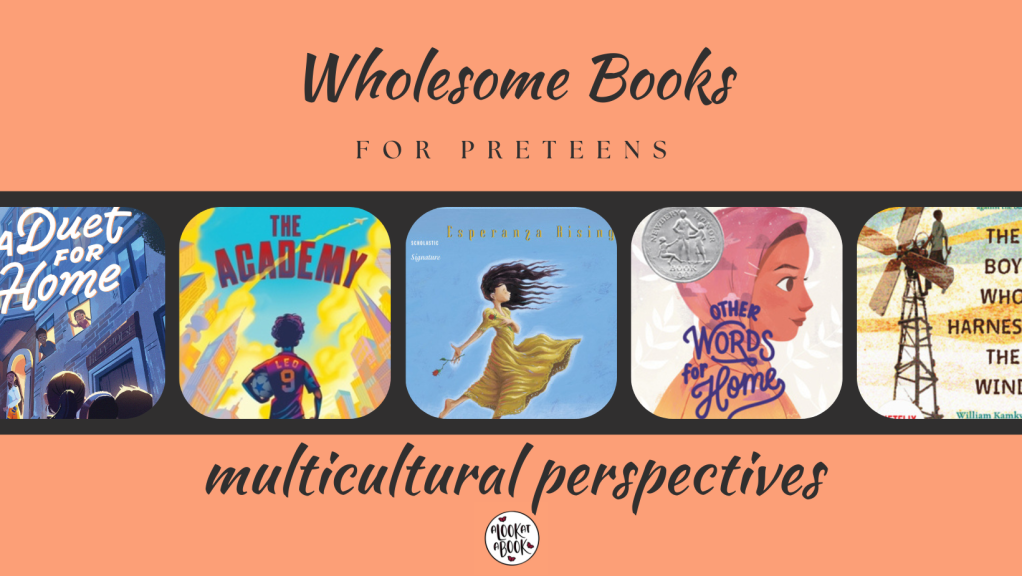
When my inspiration for this series, parents of preteens, asked me if I had any wholesome book recommendations for their kids, I knew I wanted to include a list of books that feature kids who have to straddle two cultures.
You see, the friend who asked me about recommendations is a missionary in East Asia, so her kids have grown up as TCKs (Third Culture Kids).
If you’re not familiar with the term, Third Culture Kids are ones who don’t fit in a neat cultural box. For instance, the kids in a missionary family might be technically American, but they’ve never lived in the U.S. for more than a year at a time. However, they’re not entirely cultural natives in the country/countries where they’ve lived.
They’re a beautiful and complex blend of cultures, languages, customs, and experiences, but they don’t belong completely in the categories people like to use. That can be difficult for them. I’ve seen it in my students and my roommates when I taught in another country.
TCKs can more easily relate to other cultures and differences than the rest of us can, though, and that is magnificent – even while it is often lonely and confusing, too.
I’m going to use the term “third culture kids” more broadly to include more than missionary kids, though. TCKs are really any kid who has to switch between two cultural mindsets or live between two worlds – also known as “code switching”.
They might be immigrants who have one culture at home and another at school, they could be African Americans who also have one culture in their community and another in their workplace or school, or it could even be a kid who is living one experience at home because of a family member’s chronic illness and then has to go on like everything is normal when they leave their house and join the rest of the world.
So this list of books is for the TCK preteens who live balanced between two cultures. Those who have to switch our their mental “chip” when they move between their family and the outside world. And it’s for those of us who want to understand just a bit of the worlds of these courageous people.
Now, I debated for a long time what to call this post. I’m calling the list I’ve curated here very broadly, “multicultural perspectives.” While I wish I had found more books set in other countries, most of these reflect minority experiences within the Unites States.
However, I have found that no matter whether or not the circumstances are exactly the same, the human experience of being “other” or “outsider” tends to have similar emotions. My hope is that your preteens can see themselves in these books, one way or another.
Know someone who could use this post? Share it with them!
Multicultural/BIPOC Perspectives
Immigrants and Refugees
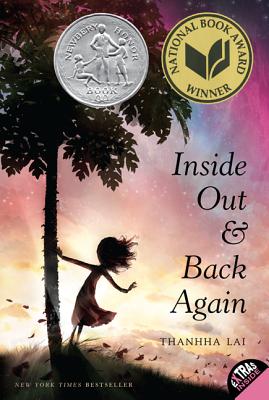
Inside Out and Back Again by Thanhhà Lại
I also recommended this book in my post on wartime books. In case you missed it . . . This was my first book-in-verse experience, and I picked it up because one of my students, who wasn’t the strongest reader, recommended it to me. Whenever my not-so-strong readers are captivated by a book, I know it’s probably a good one.
Inside Out and Back Again tells the story of a family fleeing Vietnam and coming to America to seek asylum. They have to have a sponsor family, and the main character, a ten year-old girl named Hà struggles with communication and being accepted as she learns the English language, adjusts to a new school, and finds herself sticking out like a sore thumb in a different culture.
I loved the honest portrayal of a refugee’s emotions and struggles to learn a new language. Her longing for home and the familiar. Her desire for people to know the beauty of her country and see her for herself and not just a strange spectacle or anomaly.
It’s quite well-written, but it is, of course, laced with sadness. If your preteen could use a book that they can relate to in order to feel their own sorrow, this is a good one.
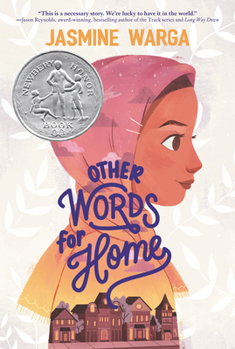
Other Words for Home by Jasmine Warga
What a beautiful book! I really appreciate it when authors help readers see from a different perspective, and hearing the voice of a (fictional) Syrian refugee adjusting to life in America did just that.
As someone who lived in another country for a few years, and learned a new language, I identified and laughed out loud in solidarity a few times at her description of learning English. I ached as she ached for home and her far-away family.
And I was reminded, once again, at how grateful I have been for people who worked to truly see ME in my shyness when using my second language. There was a sentence near the end that was especially poignant for me where she said there is no competition between her two homes; she doesn’t have to choose between them.
I listened to the audio version, which was beautiful to hear how Jude’s name should be pronounced, as well as the other Arabic words. But since this book was written in verse, I found my eyes wanting to read the words as they were written, because SEEing the verse adds to the meaning and feeling. I hope to read it again in print.
As far as content goes, this is totally appropriate for middle school age and up. The only content that might be questionable for upper elementary is when Jude gets her period, which is a huge cultural milestone, because she then gets to wear a hijab. The description of her discovery of her period beginning is quite clear, so, parents, keep that in mind.
(reposted from my Goodreads review)

A Handful of Stars by Cynthia Lord
Cynthia Lord is another author I enjoy because she is adept at broadening the reader’s perspective and delivers a heartwarming, satisfying story.
In this tale, Lily becomes friends with the daughter of migrant workers over the summer as they are in town for the blueberry season. Ms. Lord captures the strain that growing up can have on old friendships, the delight of a new friendship, and what it looks like to help each other pursue one another’s dreams, even when there are obstacles like poverty and prejudice in the way. The themes are substantive, the writing is engaging, and the lessons taught aren’t preachy.
I loved that the ending wasn’t quite expected, but was even more satisfactory because it seemed more like real life. And, being realistic fiction, that just makes sense.
What’s more, I have no qualms about putting this in the hands of any preteens because, while some of the realities of migrant workers are present, there is no cussing, no inappropriate or questionable mention of sex/romance/body parts, or anything else that can make some books not right for other kids.
Minority/Bicultural Kids’ stories
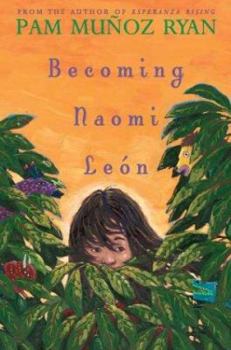
Becoming Naomi León by Pam Muñoz Ryan
You will see a couple of titles by this author in this post. It’s because she’s such a good writer! And because she nails that feeling of being out of place culturally, but providing a sense of hope, too.
Naomi is a middle grade student who, along with her younger brother, is being raised by her great-grandmother. A problem arises when Naomi’s mom comes back with promises that she’s changed and tries to regain custody of them. Naomi and her great-grandma know this isn’t a good idea, but the only hope is finding their dad, so he can have custody of them. He’s in Mexico – so they pack up and head there, arriving during a cultural festival. While there, Naomi discovers that she does indeed have the Mexican side of her family inside of her – the “Leon” side – and she gets to know her extended family.
It is a beautiful, hopeful story with such heart and substance. I came away from reading this book feeling a “Wow! That was incredible!” and still have that feeling about it five years later. I wish I could read it again for the first time. It was that good.
While there are heavy themes in here (e.g. an alcoholic mother, the threat of foster care and being within the court system), Ms. Ryan deals deftly with these themes and keeps them appropriate for preteen readers.
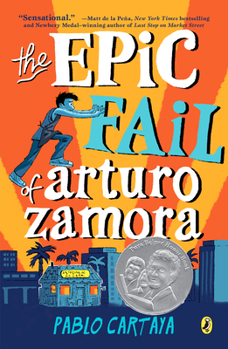
The Epic Fail of Arturo Zamora by Pablo Cartaya
Since many of these books seem to have girls as the main characters, I tried to do some searching to find some that I could recommend with boys as the main characters. I think this one fits the bill!
Arturo is a thirteen year-old Cuban American who lives in Miami in a tight-knit family. His whole family lives within the same apartment complex and the heart of their neighborhood is his abuela’s (grandma’s) restaurant.
One of the aspects that I loved about this book was that it embedded Spanish without translating each line like some books do, but you could still understand what was happening.
I also thought that this book did a great job of including a first crush without going overboard on drama. Arturo wonders at his stomach feeling funny when Carmen is around, but they connect over poetry and stopping the land developer who is trying to take down the restaurant and surrounding businesses.
Arturo throws himself into the good of fighting for his family and community, has good friends to help him, and he also is able to learn more about his heritage and family along the way through the letters from his abuelo and from the poetry of José Martí.
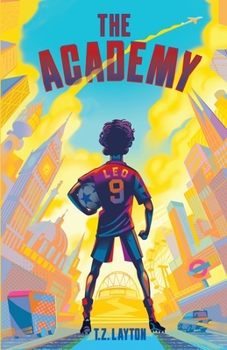
The Academy (The Academy #1) by T.Z. Layton
Here’s another book that features a boy as the main character, along with the world’s most popular sport: football. No, not American football. The sport that actually uses feet to kick the ball.
The Academy uses an underdog trope that has a satisfying, more realistic ending than I thought might happen – but is still pretty happy.
One of the lessons that people often have to learn about sports is how to push through the pain and the monotony of not being able to see improvement for a while. Leo, who has a natural talent for football, is spotted by a scout for the London Dragons youth squad. Against all odds, he is able to go to their camp and see if he can make it onto the youth team, which feeds into the professional team. It’s the chance of a lifetime – and he is way out of his comfort zone.
Will he even make it through camp? And what is all the lingo that people keep using like he should know what they’re talking about? Why does everyone care about eating healthily and doing extra beyond the grueling workouts and scrimmages?
It seems he is the only person there who has never played on a club team or had a private coach and it’s tough for him to get his feet under him. The Academy has you rooting for Leo the whole way, and hoping he will find what it takes to make it. Of course, he also makes friends and grows a lot as a person throughout. I was glad to see his character develop from a good kid into a great kid, along with him honing his soccer skills.
Historical Fiction
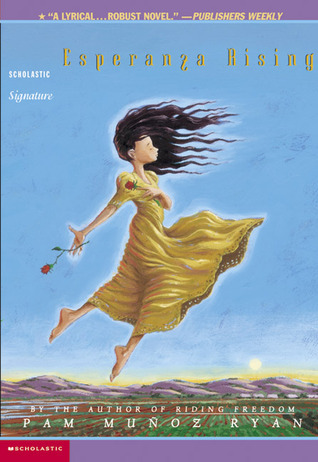
Esperanza Rising by Pam Muñoz Ryan
Here it is – one of my favorite reads. I can’t believe it’s already 25 years old as a book! This book is technically historical fiction, though it tells the story of migrant workers, which still are a part of the U.S. today.
Esperanza, which means “hope” in Spanish, is a young girl who is well-to-do in Mexico and lives on a beautiful ranch with her parents and extended family. The book begins by painting the picture of what her life was like before they had to move to the United States.
When they arrived during the Great Depression, they had to work as migrant workers, and it was a jarring change. Esperanza struggled with adjusting to having to work hard in the fields, to be accepted by others, to learn a new language . . . eventually though, she is able to adjust, and the transformation is beautiful.
I can’t recommend it enough!
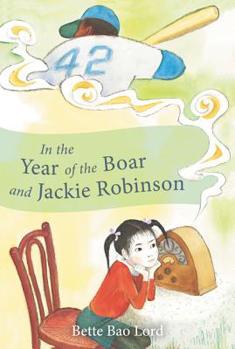
In the Year of the Boar and Jackie Robinson by Bette Bao Lord
This is an oldie but goodie.
The title is a mouthful, but it says a lot about the book: Shirley Temple Wong is a newly arrived immigrant to America from China and struggles to make friends and put down roots. A huge part of her struggle is, of course, the language barrier.
What I remember loving most about this book was the humor that the author injected into Shirley’s attempts to understand and learn English: the way words would blur together as she listened or the ways that she misheard what a song said. While some mishaps can be embarrassing when trying to speak a new language, it helps to see the humor! Ms. Lord does a great job finding the funny side in a difficult transition.
The second part of the title – about Jackie Robinson – hints at the other aspect of the story. It’s historical fiction, set during the Civil Rights movement, and focusing on how Jackie Robinson’s success in baseball bolstered the morale of minorities – even, perhaps, a young Chinese immigrant.
Wholesome, thought-provoking, and humorous, it’s a book I’d recommend wholeheartedly to any preteen.
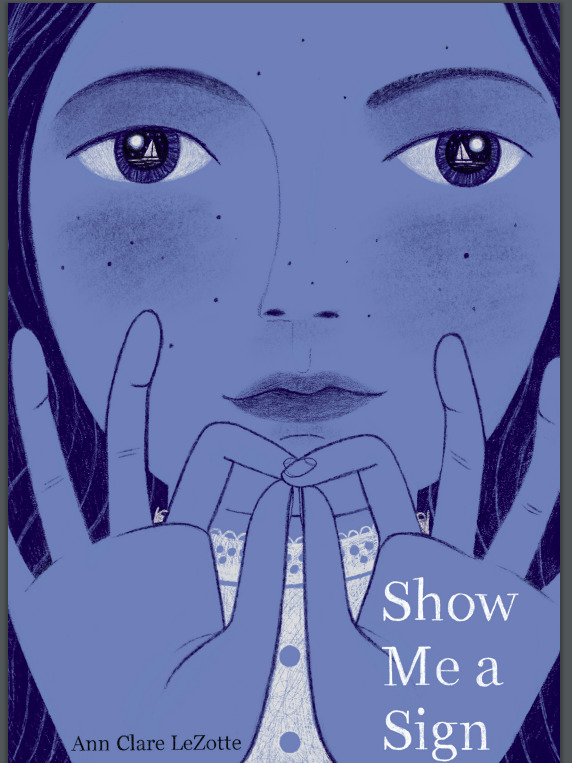
Show Me a Sign by Ann Clare LeZotte
I thoroughly enjoyed this book, because through it, I learned about a place and time that I had no clue existed prior to reading the book.
Mary, the protagonist, is a girl who was born deaf and lives in a town where a large percentage of the population was born deaf and where most everyone signs. Half of her family is deaf, and the other half is hearing.
I really appreciated the social commentary the Ms. LeZotte gave, which I imagine is partly due to her own experience of being deaf. Her thoughts on how people view and treat those who are different from them is thought-provoking and timely. She masterfully wove together several aspects of life in the early 1800s on Martha’s Vineyard island, and, in doing so, revealed the complexity of the culture and times.
Two minor gripes: There was one inconsistency I noticed. Ezra Brewer interprets the sermon in one part, but in every other spot, he has to have others interpret since he’s deaf. That left me scratching my head a bit.
Also, I didn’t love the beginning of the second part, because it felt a little contrived and abrupt; however, by the end, it felt like it all came back together. Overall, it was a quite enjoyable read.
I think this would make a great read-aloud or independent read for middle grade kids! Plus, it’s the first in a series.

Bud, Not Buddy by Christopher Paul Curtis
I am always impressed by authors who manage to take real life, harsh experiences and portray them in a way that makes them accessible to kids. The story is told through Bud’s voice, when he decides that he has had enough of the abuse in the foster system, after being orphaned for a few years, and he’s going to search for the man he thinks must be his dad, based on the “clues” his mom left for him.
Through humor-laced, very kid-like descriptions, we get to watch Bud traverse Michigan and survive on his own until he can find a place to belong. (Spoiler: he does – but not in the way you might anticipate.)
Memoirs
Brown Girl Dreaming by Jacqueline Woodson
I remember being wowed by this memoir-in-verse. It’s hard enough to find words to convey deep emotion in prose, but then to limit yourself to verse . . . that’s an even bigger challenge!
This book was beautiful. I’ve never read a memoir in verse before, so the structure was unique. But the words themselves, and the way the poetry conveyed a dreamlike feel enriched the story.
As the author said in her note at the back, she had a “complicated” and “rich” childhood. Not only did she grow up for most of her formative years without her dad, but she was born right in the thick of the Civil Rights movement. She recounts, through child’s eyes mostly, how she absorbed her parents’ and grandparents’ views on racism and the experience of being Black during that period. She also explained, in a gentle way, her experience with her grandmother raising her as a Jehovah’s Witness and how she tries to reconcile that faith with her uncle’s change in religion and other life experiences.
I’d recommend reading this book either before or along with your preteen so that you can discuss the complex themes and worldview in here. It’s wholesome in that it conveys beauty, but it is also profound in its discussion of being Black and experiencing racism. If you’re a Christian, it would also help to brush up on the differences between Jehovah’s Witness and Christianity so you can talk through the worldview differences with your kiddo.
Again, the main words I can think of for this book are “beautiful” and “rich.” Woodson is such a talented writer! I’m always impressed by people who write chapter book-length stories in verse.
The Boy Who Harnessed the Wind Young Reader’s Edition by William Kamkwamba
My university made every incoming freshman read the same book, and I, rule follower that I am, was sure to do so. Am I ever glad that I did! They weren’t always such great choices (just ask my sister), but my year’s book was fantastic.
William Kamkwamba tells the story of how he used trial and error, garbage gems, and science books to bring electricity and water to his family by building a windmill after a drought left them devastated and without food to eat.
I haven’t read the young reader’s edition specifically, but I recommend whichever edition would entice your reader to learn about William’s story. It is inspiring, hopeful, and thrilling.
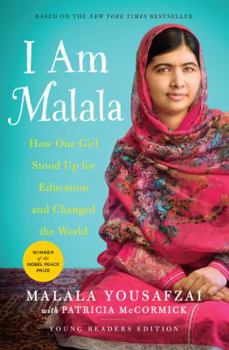
I am Malala by Malala Yousafzai
An individual story often brings in to sharp focus the reality of a far-away place with distant conflicts and unknown cultures. That is true here.
Malala lived in Pakistan and experienced the Taliban taking over her community. All of a sudden, girls were told that they could not go to school. Malala refused to give up her education, and was severely, brutally punished for it.
She could have died one day when she was shot at point-blank range. However, she did not die, and has lived to tell the world her story. I had a newfound appreciation for the access to education that I grew up wtih.
I suggest the young reader’s edition here, in part due to the brutality and severity of life in Pakistan during this time. However, if you think your child is ready for the “adult’ version, I’d say go for it. My recommendation is the same as before: read it before or along with your child so you can discuss all the complex and challenging parts of Malala’s story.
Family Difficulties
These titles are a mix between highlighting a minority culture within America while also tackling some big family issues, like the loss of a loved one or a family member’s illness.
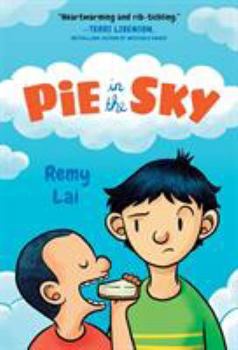
Pie in the Sky by Remy Lai
I recommend the audio version of this book! Jingwen, his little brother, and his mom have all moved to the U.S. What is revealed in little bits to the reader is that they moved after the death of his father. Jingwen has a lot of regrets that complicate his grief.
The way he starts to cope is by making all the cakes that his dad had planned to make when they were able to open their own bakery someday: the Pie in the Sky bakery. However, their mom doesn’t want them to use the oven while she’s at work. So Jingwen figures out how to hide their baking from his mom.
He also has a lot of difficulties in school. English, he thinks, sounds like Martian. The audio version even has a “Martian” sound for what English sounds like to him. I loved that aspect of what it’s like to be listening to a language that you can’t understand. Unfortunately for him, his younger brother Yanghao doesn’t seem to have the same issues that he does in learning English. Along with his grief, we watch as Jingwen struggles to even want to learn English or succeed in school, and his ever-so-slow transformation that happens throughout the book.
I loved the layers upon layers of life that were present amongst the grief, the adjustment to a new country, the single working mom trying so hard to make sure her boys are safe but also having to work at night while they sleep. There was also the aspect of Jingwen and his isolation at school and his failure to recognize another student’s attempt to be friends with him, but who didn’t know how to break the language barrier.
One thing I didn’t love: he lied and hid the cake baking from his mom for a lot of the book. Even after promising his mom, he broke his promise and kept baking. The truth eventually comes out, but it’s all very fast in the end. The consequences of his secrets show that the author doesn’t condone the lying; I just personally squirmed every time he didn’t come clean and talk about his grief with his mom.
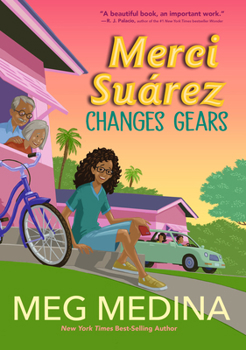
Merci Suárez Changes Gears by Meg Medina
As someone who lived with her family while caring for a grandparent with Alzheimers, this hit home for me. Stories have the power to convey complex emotions in ways just explaining them can’t.
Merci is a middle schooler whose extended family all lives on the same street. She’s extremely close to her grandfather, but she has started to notice something is off. The adults in her family, however, refuse to tell her anything. They think they’re sparing her the pain.
However, this doesn’t help Merci, because she knows something is wrong: one day her grandpa can do certain things and the next day he can’t. But then a few days later, he can again. She’s embarrassed by his inability to do simple, normal things. She’s worried about him and also can feel the worry of her parents, aunts, and uncles.
There’s a lot going on at school for her, but she decides not to tell at home because she doesn’t want to pile on to the adults’ already full plates. Her life at school feels totally separate from the worries at home.
Ms. Medina does a stunning job conveying emotions that I experienced while my family cared for my grandma.
Read it – even if you’re not a kid. Because I’m guessing you’ll encounter someone in your life, sooner or later, who is giving care to someone they love and who would benefit from a friend with some ability to empathize. This book can help you grow the ability to show empathy.
And If someone in your family does have Alzheimer’s, or perhaps another chronic illness, this could be a book that helps your kiddos feel seen and know that they’re not alone in their emotions.
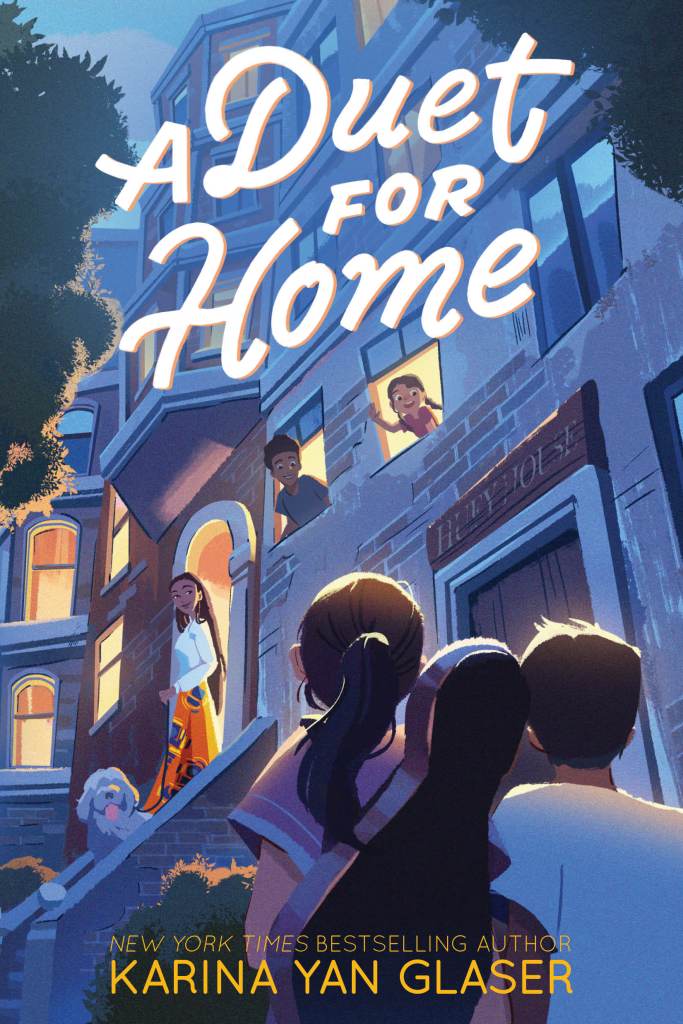
A Duet for Home by Karina Yan Glaser
This is one of my more recent favorite preteen reads. Ms. Glaser is a really talented writer!
This is a beautiful story of resilience and hope in the face of quite difficult circumstances. June finds herself in in the difficult position of having to take charge of her younger sister and her mom as they are evicted and shuttled off to a homeless shelter for families. She has to learn to navigate this world she doesn’t know and pretend like everything is fine while at school.
Meanwhile, forces are at play to shut down the facility where they’re staying, which supports parents in getting a job and getting back on their feet. June and her new, also homeless, friend Tyrell join forces to fight back and raise awareness.
I loved how the author showed the spirit and goodness in the kids who many adults view as only mischief makers or “difficult”. I also appreciate the fact that homeless kids can see themselves in this book and kids who haven’t ever experienced it can develop empathy.
The beauty of how the author tied in the title with the storyline without being overt about it gives me a “mwah” -chef’s kiss-type of feeling.
It’s a great book all-around, and I can’t say enough good about it!
What books would you add to this wholesome list? Leave a comment with what might be missing in this list!
Looking for other books for the preteens in your life?
19 Old-fashioned and Contemporary Picks
9 Historical Fiction Books from Across the Globe
11 Wartime Historical Fiction
10+ Historical Fiction Tales in the U.S.
8 Stand-alone Fantasy Books
10 Magical Fantasy Series
 a Look at a Book
Leave a comment