My fellow readers, you probably know how incredibly meaningful it can be to read a book at just the right time in your life.
For me, that has happened multiple times, especially when I have been processing tough life circumstances.
For kids, experiencing challenging and heart-wrenching circumstances is new for them (we hope). But by the time they are preteens, many have experienced some kind of challenge, especially like these:
- Loss (moving, for example, or losing a friend)
- Grief
- A family member’s illness
- Family financial challenges or being “different” from others
- Divorce of parents or a parent who leaves
Because their precious hearts and brains haven’t fully developed logic or a counseling-level of processing, books can often help them put their feelings and confusion into words. Reading about someone else’s experience also helps them know that they are not alone in their difficulty and pain. Knowing someone else can relate helps immensely!
As I’ve taught middle grades, I have kept a list of books that would be good especially for kids who are experiencing something tough. Some of these books I would recommend to preteens universally. Others are ones that I would be choosy about recommending. I’ll note them below.
If you have read other parts of this Books for Preteens series, you’ll notice that most of these have appeared in other posts. In fact, I debated whether or not I should make this list into its own post, since I have already recommended these books elsewhere. However, I have not ever put them all in the same place, and I decided that a list of books specifically for kids experiencing tough circumstances could be valuable to their grownups.
As usual, this list isn’t attempting to be exhaustive. Rather, it is based on the books that I have personally read and can recommend to preteens.
If you have a title you think I should add to the list, scroll down and leave a comment!
If you know a parent of preteens who would benefit from this list, share this post with them!
This post may contain affiliate links to bookstores, which means, at no extra cost to you, I’ll receive a commission if you purchase through my links. This helps me cover the costs of running this website. Please read full disclosure for more information.
Family Member’s Illness or Disability

Rules by Cynthia Lord
This book is good for: kids who are neurodivergent and their families’ feelings about their situation.
Catherine, a middle schooler, gets frustrated with her younger brother, who has autism. When things don’t run exactly on schedule, he really struggles, and she ends up having to help calm him down. Her wants often get pushed to the side because of his needs. It frustrates her, but she also loves her brother.
This book has a bit of a plot, but it involves more character development than anything. It’s great for helping normalize differences in kiddos and also for helping siblings, who can often feel ignored or less important than the child with extra needs in the family, feel like they’re not alone. I think this book would also go a long way to helping a kid whose friend might have siblings with special needs, and wants to understand their lives a little better.

Wonder by R.J. Palacio
This book is good for: older preteens who either have had their own complex medical histories OR their siblings who have had to take a backseat while their parents care for another sibling.
Auggie was born with multiple facial abnormalities and health difficulties. He experiences many surgeries and hospital stays. Because of this, he hasn’t ever attended a school; he has been homeschooled. However, once he gets to fifth grade, he and his family make the decision to try it out – not without a lot of nervousness.
The story of how Auggie is able to make friends at a “normal” school, and how people are able to see the wonder of his brains and heart beyond his different physical appearance, is heartwarming, challenging, and oh, so good.
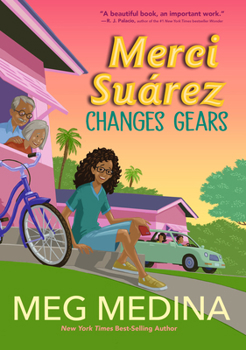
Merci Suárez Changes Gears by Meg Medina
This book is good for: someone who is going through an elderly family member’s diagnosis and illness, specifically dementia or Alzheimer’s – both the kids and their grownups.
I wish my parents could have read about another grandkid’s experience so they would know a bit more of what my siblings and I were feeling as we cared for my grandma.
Stories have the power to convey complex emotions in ways that just explaining them can’t.
Merci is a middle schooler whose extended family all lives on the same street. She’s extremely close to her grandfather, but she has started to notice something is off. The adults in her family, however, refuse to tell her anything. They think they’re sparing her the pain.
However, this doesn’t help Merci, because she knows something is wrong: one day her grandpa can do certain things and the next day he can’t. But then a few days later, he can again. She’s embarrassed by his inability to do things. She’s worried about him and also can feel the worry of her parents, aunts, and uncles.
There’s a lot going on at school for her, but she decides not to tell at home because she doesn’t want to pile on to the adults’ already full plates. Her life at school feels totally separate from the worries at home.
Ms. Medina does a stunning job conveying emotions that I experienced while my family cared for my grandma.
Read it – even if you’re not a kid. Because I’m guessing you’ll encounter someone in your life, sooner or later, who is giving care to someone they love and who would benefit from a friend with some ability to empathize. This book can help you grow the ability to show empathy.
This could be a book that helps your kiddos feel seen and know that they’re not alone in their emotions.
Grief, Loss, or Big Change
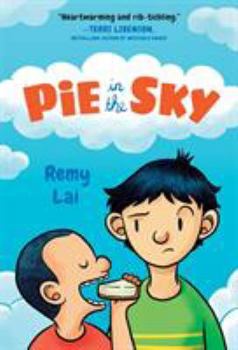
Pie in the Sky by Remy Lai
Good for: kids who have moved cultures, are learning another language, and/or have lost a parent
I recommend the audio version of this book! Jingwen, his little brother, and his mom have all moved to the U.S. What the reader finds out slowly is that they moved after the death of his father. Jingwen has a lot of regrets that complicate his grief.
The way he starts to cope is by making all the cakes that his dad had planned to make when they were able to open their own bakery someday: the Pie in the Sky bakery. However, their mom doesn’t want them to use the oven while she’s at work. So Jingwen figures out how to hide their baking from his mom.
He also has a lot of difficulties in school. English, he thinks, sounds like Martian. The audio version even has a “Martian” sound for what English sounds like to him. I loved that aspect of what it’s like to be listening to a language that you can’t understand. Unfortunately for him, his younger brother Yanghao doesn’t seem to have the same issues that he does in learning English. Along with his grief, we watch as Jingwen struggles to even want to learn English or succeed in school, and the transformation that happens ever so slowly throughout the book.
I loved the layers upon layers of life that were present with the grief, the adjustment to a new country, the single working mom trying so hard to make sure her boys are safe, but also having to work while they sleep. There was also the aspect of Jingwen and his isolation at school and his failure to recognize another student’s attempt to be friends with him but who didn’t know how to break the language barrier.
One thing I didn’t love: he lied and hid the cake baking from his mom for most of the book. Even after promising his mom that he would not keep baking, he broke his promise multiple times. The truth eventually comes out, but it’s all very fast in the end. The consequences of his secrets show that the author doesn’t condone the lying; I just personally squirmed every time he didn’t come clean and talk about his grief with his mom.

When Life Gives You Lemons, Make Peach Pie by Erin Soderberg Downing
Good for: kids who have lost a parent to an illness, especially if their remaining parent has been withdrawn in their own grief
This quirky book, set during summer break, tells the physical and metaphorical journey of a family who starts a pie truck and tries to win a food truck contest by the end of the summer. Each sibling is given their own unique likes and dislikes, and varying chapters are from each of their perspectives, which highlights how each child sees their role in their family.
The truth is, all of them, including their dad, are still grappling with the loss of their mom/wife to cancer. It’s slightly unrealistic in the food truck aspect of thes tory, but it deals with grief in a gracious and hopeful way. I think even if your preteen hasn’t dealt with a loss themselves, you could give them this book anyway. Perhaps it would help them understand a friend’s loss a bit better.
While the vocabulary and plot isn’t the richest I’ve read, the creative use of fonts and other types of writing/drawing (journal entries, etc) made it engaging to read. And perhaps its not-as-rich vocabulary would be appealing to a somewhat reluctant reader.
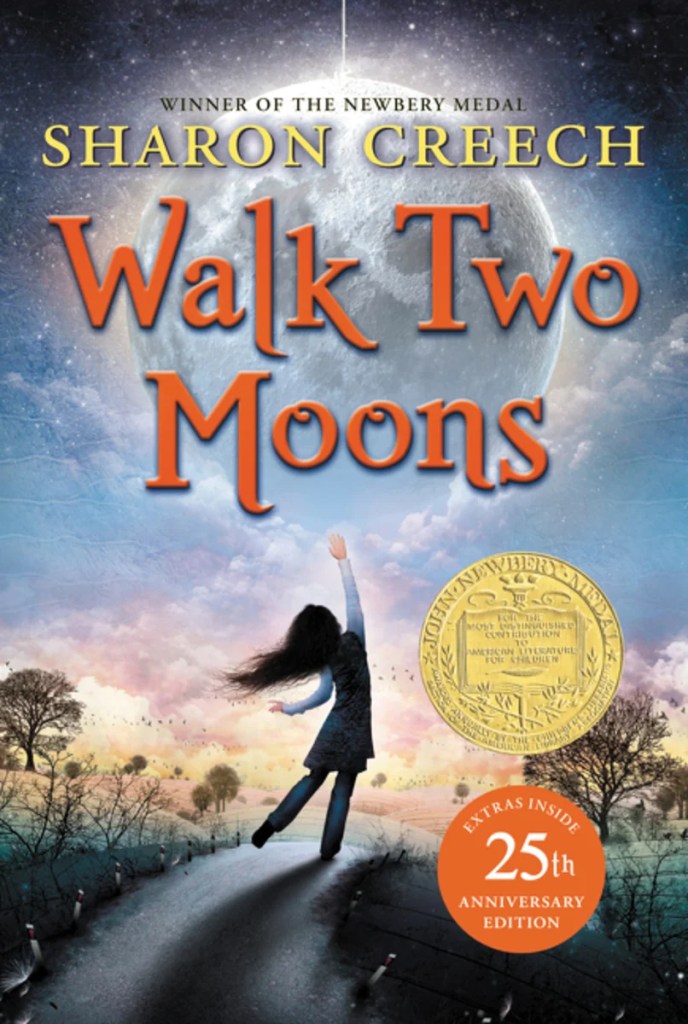
Walk Two Moons by Sharon Creech
Good for: a child who is looking for a sense of their own history and family, whose parents have left them or died. I’d be choosy about who I give this to – likely only to kids who have experienced the above
I listened to the audio version of this book, which added a bit more mystery to it than is already present. The reader knows that Sal and her grandparents are on a long road trip, and it’s related to Sal’s mother.
What you don’t know, until close to the end, is that her mom is well and truly gone (dead). What you do know is that her mother left her with her grandparents, and you also hear her spin a tale of another girl whose mother went missing.
The tales weave together and help make the reader get a very good sense of Sal’s emotions and her processing. She is thirteen years old in the book, so kids in and around that age would be just the right audience…and adults would benefit from Sal’s experience of loss and grief.
It has some humor and quirky character names that lighten the heavier topics, but it’s definitely one that I didn’t rush through.
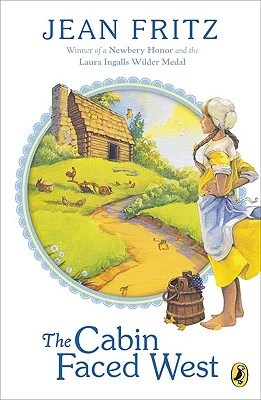
The Cabin Faced West by Jean Fritz
Good for: kids who have moved and are struggling to adjust to the big changes and their new surroundings
Okay. This historical fiction book might seem like a strange pick in the midst of these more contemporary novels. However, for younger and less advanced preteen readers who have moved and longed for their old home, the emotions of Ann will hit home.
Ann is ten years old and her family moved to the edges of the frontier, where she spends her days lonely, working hard, and also bored, since there is no one to play with her when the older folks in her family are working.
The end is a bit unrealistic and a quick ending, but it gives the reader hope that since Ann can adjust her perspective, so can we: by the end, Ann starts to realize the beauty of where she lives and the good aspects of her family’s experience.
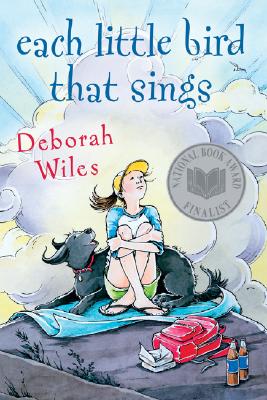
Each Little Bird That Sings by Deborah Wiles
Good for: someone who has lost a close family member and could identify with a lot of the feelings of grief in this books. I’d be choosy about who I give this to – only kiddos who are experiencing grief.
Comfort is a preteen girl who attends funerals all the time, because the family business is a funeral home. She knows all about how death works and what happens to bodies afterward. However, in a few short months, she loses two elderly members of her family. All of a sudden she has to deal with the pain of loss, along with a changing relationship with her best friend. It is a strangely humorous book, given its content, but it was also cathartic and I shed a few tears as I read it, relating to how the pain of grief was portrayed. But there is hope and healing toward the end.
If a kid in your life could use a book friend to help process grief, I definitely recommend this one. It’s quirky, but honest.
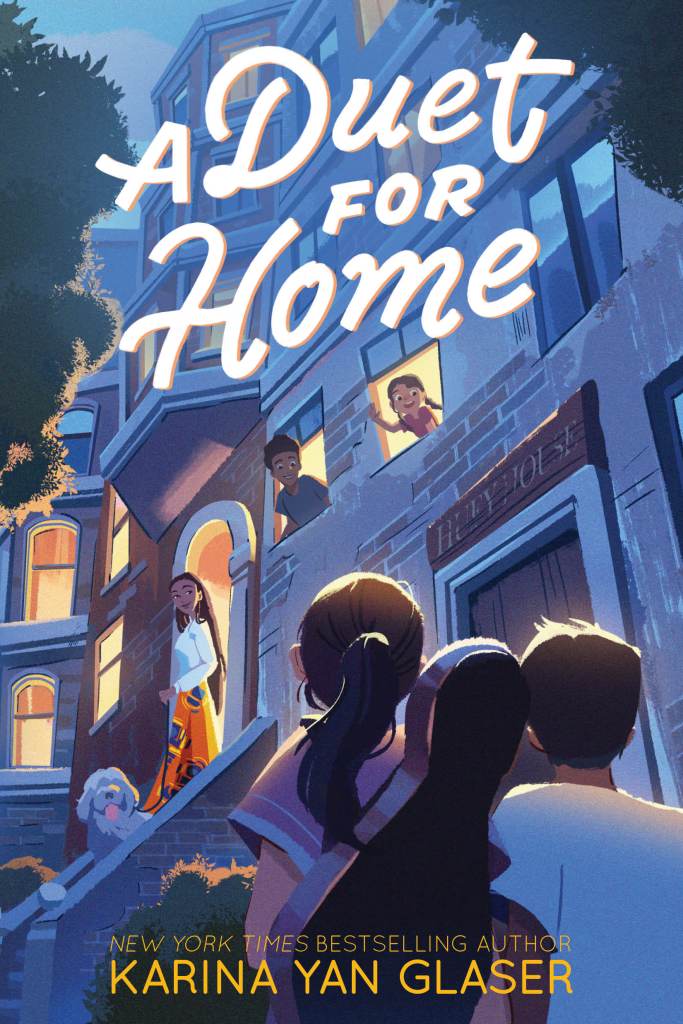
A Duet for Home by Karina Yan Glaser
Good for: kids who have experienced (or are experiencing) homelessness, the loss of a parent, the emotional withdrawal of another parent, or having to be nearly fully responsible for younger siblings.
This is a beautiful story of resilience and hope in the face of quite difficult circumstances. June finds herself in in the difficult position of having to take charge of her younger sister and her mom as they are evicted and shuttled off to a homeless shelter for families. She has to learn to navigate this world she doesn’t know and pretend like everything is fine while at school.
Meanwhile, forces are at play to shut down the facility where they’re staying, which supports parents in getting a job and getting back on their feet. June and her new, also homeless, friend Tyrell join forces to fight back and raise awareness.
I loved how the author showed the spirit and goodness in the kids who many adults view as only mischief makers or “difficult”. I also appreciate the fact that homeless kids can see themselves in this book and kids who haven’t ever experienced it can develop empathy.
The beauty of how the author tied in the title with the storyline without being overt about it gives me a “mwah” -chef’s kiss-type of feeling.
Ms. Glaser is a really talented writer, and it’s a great book all-around. I can’t say enough good about it!
Divorced or Absent Parents
There are so many books written with divorce or an absent parent as part of it, and the reality of divorce is wildly prevalent in many kids’ lives. However, many of the books I’ve read haven’t met my standards for being wholesome, giving hope, or just generally being good writing. Therefore, I’ve only included a couple of titles here. If you’ve read some good ones, send them my way!

Beauty by Bill Wallace
Good for: Kids whose parents have had marital problems and get divorced or abandoned by a parent; kids who have to move in with grandparents; kids who generally need the catharsis that can come from a book that helps you feel complex emotions
I picked up this book in a classroom library and honestly doubted if I would like it. Well, I did. 🙂
Books with horses have drawn me to them ever since I was a girl who wished I could take lessons at a stable and/or have my own horse. (I had no idea how expensive horses can be at first :D)
Luke’s dad and mom have problems, and eventually, his dad leaves them. Luke’s mom is forced to relocate them to her father’s ranch for financial reasons, and Luke struggles with all sorts of emotions. He bonds with his mom’s old mare, Beauty, and whispers all his emotions to her because she’s a safe presence. His grandpa, who is a bit curmudgeonly, but loving, is now a big force in Luke’s life and one of his primary caretakers.
Well, Luke has all sorts of adventures with Beauty, and is starting to heal emotionally, but one night there is a storm and Beauty gets terribly injured. What happens to Beauty – and to Luke and his mom and grandpa?
As one Goodreads reviewer said, “If you rate a book by its ability to make you feel, this one can’t miss. I recommend with a very rare 5 star rating.”
I couldn’t have said it better myself.
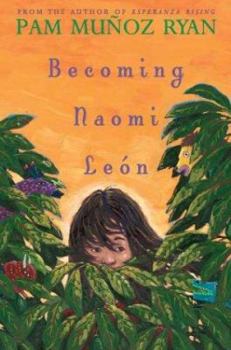
Becoming Naomi León by Pam Muñoz Ryan
Good for: kids who are missing some family history and a sense of identity and belonging due to absent parents; are being raised by grandparents; and/or have a parent who is inconsistently present and mentally stable
Naomi is a middle grade student who, along with her younger brother, is being raised by her great-grandmother. A problem arises when Naomi’s mom comes back with promises that she’s changed and tries to regain custody of them. Naomi and her great-grandma know this isn’t a good idea, but the only hope is finding their dad, so he can have custody of them. He’s in his home country of Mexico – so they pack up and head there, arriving during a cultural festival. While there, Naomi discovers that she does indeed have the Mexican side of her family inside of her – the “Leon” side – and she gets to know her extended family.
It is a beautiful, hopeful story with such heart and substance. I came away from reading this book feeling a “Wow! That was incredible!” and still have that feeling about it many years later. I wish I could read it again for the first time – it was that good.
While there are heavy themes in here (e.g. an alcoholic mother, the threat of foster care and being within the court system), Ms. Ryan deals deftly with these themes and keeps them appropriate and accessible for preteen readers.
Being Different
Many of the above books would also fit in this category: family illness can make a person feel different than others, as well as circumstances like homelessness or only having one parent in the picture, etc.

Out of My Mind by Sharon Draper
Good for: kids who are nonverbal but SO smart AND the people around them
This book has mixed reviews on Goodreads, partly because it is not completely timeless in the slang and technological advances and a few characters are fairly flat.
However, many reviewers say that it is an (unfortunately) realistic portrayal of the public school experience for kids who have cerebral palsy or other challenges and are smart, but not independent “enough” for the mainstream classroom.
Melody has CP and cannot walk or talk, but she has a photographic memory and an extremely strong vocabulary – but no one knows that because . . . she can’t talk.
Eventually someone tries to get her some equipment to help her communicate – like a spelling board, and even more advanced technology that can speak for her. Her parents run into problems with insurance and struggle to have enough money to pay for the things that would help Melody succeed in communicating and being in a mainstream classroom (where her intelligence truly belonged).
Even though it has some criticisms worth mentioning – you can read some reviews yourself – none of them are about the heart of the content or about inappropriate content. I think this book still has the power to help preteens and adults truly see and seek to understand the humans around them who are different physically – but not necessarily mentally.
Fish in a Tree by Lynda Mullaly Hunt
Good for: kids who have dyslexia or other learning differences AND the people around them
Ally is a new student who has always gotten into trouble at her old schools. When she starts sixth grade, it seems like it will all be the same. The reader eventually discovers (before Ally does) that she “causes trouble” because she has trouble reading. She’s in sixth grade but can’t read.
I love this book for several reasons: 1) kids with learning struggles/differences can identify SO well with Ally. 2) She makes some very faithful friends in her class. 3) We catch a glimpse of how many unique people are in her class and come to appreciate all their differences. 4) Kids love this book. 5) It teaches life lessons without sounding cliché, cheesy, or preachy.

Anne of Green Gables by L.M. Montgomery
Good for: kids who are quirkily different than their peers and/or are orphans and are adopted.
Hopefully you already know and have read this classic series about the orphan Anne who is accidentally adopted by an older spinster and her bachelor brother on Prince Edward Island. If you haven’t, do yourself a favor and try reading it – perhaps even read it with your preteen!
This series follows Anne from the age of eleven all the way through college and beyond. While I read it and enjoyed the whole series from the age of eleven on up, I’ve found that I’ve enjoyed rereading it at different points through my growing up and young adult years, because I identify with Anne in her older stages of life too.
Anne of Green Gables is one of my lifetime favorite series, and I love that it’s accessible to younger readers, but rich enough to appeal to older readers as well. I haven’t met too many people who can resist this fiery redhead and her boundless imagination and zest for life!
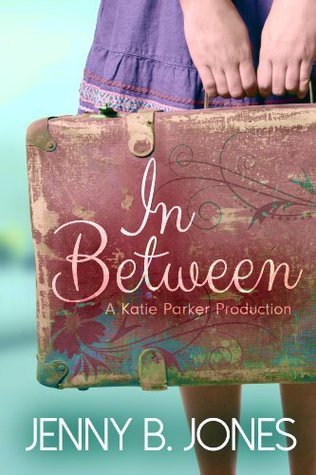
In Between (#1 A Katie Parker Production) by Jenny B. Jones
Good for: older preteens who are in the foster care system or who have a friend in the system
I read this book far past my preteen years, but I loved the look into a teen’s inner turmoil and emotions and trying to be tough for self-protection while also really wanting her foster family to like her.
This is book 1 of a series, which follows Katie Parker all the way through college into her early career, along with a romance or two. The subsequent books are more suited for young adults/teens. So, I say this book is best for older preteens because it does deal with some pretty heavy stuff. Her mom lost custody because of her addiction to drugs, and her foster parents’ biological daughter has pretty tough issues of her own (but is absent for most of the book).
However, there is SO much humor in this book that it has had me laughing out loud even on rereads. I love her foster grandma’s ridiculous, yet no-nonsense character; Katie’s experience of trying to protect herself while also really wanting to make it work with her foster family; and the fact that her foster parents, while requiring church attendance (her foster dad is a pastor), don’t force her to believe anything before she is ready; and the way she makes some really good friends who stick by her even through her poor decisions or misdirected anger.
I loved reading this book as an insight into how a foster kid might feel and how most kids aren’t “bad” but they may have trouble figuring out how to act appropriately, despite desiring to do so. Plus, the author made it hopeful while also being honest about the struggles of a child in the system.
Looking for other books for preteens? Check out the other posts in this series:
19 Old-fashioned and Contemporary Picks
9 Historical Fiction Books from Across the Globe
11 Wartime Historical Fiction
10+ Historical Fiction Tales in the U.S.
8 Stand-alone Fantasy Books
10 Magical Fantasy Series
16 Books with Multicultural Perspectives
Want to see more content like this?
Like, comment, share and follow!
👍💬⌯⌲🔔

 a Look at a Book
Leave a comment